
Friday, October 14, 2011
Cholla Garden in Joshua Tree
Monday, October 10, 2011
5 Tips For Better Composition
Some people have a natural knack for composition. They can just look a scene and effortlessly create a perfect image that you could stare at for hours. These five tips are for the rest of us.
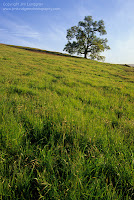 Rule Of Thirds: Draw a Tic-Tac-Toe board on your frame with two horizontal lines and two vertical lines There will be four points where the lines intersect. These are your "sweet spots" and are great areas to put your subject in to create a dynamic composition. If your subject is tall, place it along one of the vertical lines. Place subjects like horizons along one of the horizontal lines. Put your subject in the center and the viewer only looks at one spot. An eye stuck in one spot tends to get bored. I'm getting sleepy just thinking about it.
 Lines Create Depth: Most landscape photos have a foreground and background. If these two are divided in half, the viewer's eye gets trapped in one spot. Use natural lines (like patterns in the sand, driftwood on the beach, or meandering streams) to lead the viewer back and forth between the foreground and the background. An interesting composition keeps the eye constantly moving back and forth across the image. Connect the "sweet spots" with the lines and now we're talkin' composition.
 Patterns Are Fun: Repeat this phrase...Repeat this phrase...Repeat this phrase. There is something comforting about repeating patterns. Maybe it is in our nature to try to create order, maybe we like things neat and tidy, or maybe we can't find anything else to photograph. Look for ripples in the sand, leaves scattered across the ground, or clouds floating across the sky then fill the frame with that and nothing else. Repeating patterns keep the eye moving and the viewer interested.
 Keep It Simple: Less is more. There is nothing that can ruin an image faster than visual clutter. Unless you have an amazing pattern in front of you, try everything you can to eliminate every single bit of unneeded stuff in your photo. Change your camera angle, use a longer lens to fill the frame with the subject, or blur the background to eliminate the dead tree branches behind your subject. Just please, for the love of Kodachrome, keep it simple.
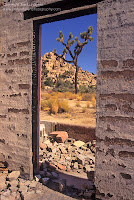 Find A Frame: No, I'm not talking about scouring the local garage sales for pieces of wood and glass. When you are composing the image, look for natural subjects like trees, clouds, or cliffs to frame the image and direct the eye towards the subject. If an eye wanders out of the frame, it will probably keep on wandering until it finds something else interesting to look at. Chances are it won't be your photo.
Next time you are setting up your camera, try to keep these five tips in mind. If you use even one of them, you will create a better composition and come home with a better photograph. If you use all five, you may just create a work of art.
 Rule Of Thirds: Draw a Tic-Tac-Toe board on your frame with two horizontal lines and two vertical lines There will be four points where the lines intersect. These are your "sweet spots" and are great areas to put your subject in to create a dynamic composition. If your subject is tall, place it along one of the vertical lines. Place subjects like horizons along one of the horizontal lines. Put your subject in the center and the viewer only looks at one spot. An eye stuck in one spot tends to get bored. I'm getting sleepy just thinking about it.
 Lines Create Depth: Most landscape photos have a foreground and background. If these two are divided in half, the viewer's eye gets trapped in one spot. Use natural lines (like patterns in the sand, driftwood on the beach, or meandering streams) to lead the viewer back and forth between the foreground and the background. An interesting composition keeps the eye constantly moving back and forth across the image. Connect the "sweet spots" with the lines and now we're talkin' composition.


 Find A Frame: No, I'm not talking about scouring the local garage sales for pieces of wood and glass. When you are composing the image, look for natural subjects like trees, clouds, or cliffs to frame the image and direct the eye towards the subject. If an eye wanders out of the frame, it will probably keep on wandering until it finds something else interesting to look at. Chances are it won't be your photo.
Next time you are setting up your camera, try to keep these five tips in mind. If you use even one of them, you will create a better composition and come home with a better photograph. If you use all five, you may just create a work of art.
Friday, October 7, 2011
Devil's Golf Course, Death Valley
Several years ago, I decided to try my favorite technique of driving through winter storms to be on location when the rain stopped and the skies began to clear. I set up my tent in the campground and proceeded to wait for sunrise when the expected clearing would hopefully produce some great images.
It rained all night, and the next day, and the next three days and three nights after that. I was evacuated from two different campgrounds because of flash flood concerns and ended up pitching my tent between two RVs on a gravel pad. Seeing me soggy and depressed, one of my neighbors took pity on me and invited me in for a hot dinner and a movie on his satellite TV set. It was one of the most welcome moments of generosity I have ever received.
It rained all night, and the next day, and the next three days and three nights after that. I was evacuated from two different campgrounds because of flash flood concerns and ended up pitching my tent between two RVs on a gravel pad. Seeing me soggy and depressed, one of my neighbors took pity on me and invited me in for a hot dinner and a movie on his satellite TV set. It was one of the most welcome moments of generosity I have ever received.

I would like to tell you that I was rewarded for my efforts with amazing light but the truth was I threw in the towel the next morning and headed for home. This image was taken a month later when I returned to "get that monkey off my back." This time the storm did clear, the clouds parted for a few minutes over Devil's Golf Course, and the sun shone through.
Tuesday, October 4, 2011
Pacific Swell Meets The Big Sur Coast

Wednesday, September 28, 2011
Aspen, South Fork Bishop Creek
You may not know the names, but most people can immediately recognize most of the iconic views of the west. Tunnel View in Yosemite, The Narrows in Zion, and Oxbow Bend in The Tetons come to mind. As a photographer, I know where most of them are but there are a few spots that you stumble across by accident.

I was driving up the South Fork of Bishop Creek in the Sierra Nevada, when I noticed a grove of Aspen. across the canyon As soon as I set up my tripod and put on a longer lens, I knew I had seen these trees countless times before over decades of pouring though books, calendars, and magazines. In face, these trees may have been photographed more than nearly any other patch of fall color. As I worked every composition I could think of, I thought about how many photographers had stood at this very same pullout alongside the road, camera on tripod, shooting across the valley. Yeah, it may not be my most unique image, but there was something rewarding about putting my own stamp on this popular spot. If you find yourself in California near Bishop, take a drive up the valley and see if you can find them. If it's a sunny autumn day, I bet you can.

Sunday, September 25, 2011
Falls Creek, Washington

Click here for another image from the base of the falls.
Tuesday, September 20, 2011

Subscribe to:
Posts (Atom)